
Deutsche Version: Kunst sammeln für Anfänger: so finden Sie Ihr erstes Original
Collecting art sounds like something for museums and millionaires. In reality, most collections start the same way: with one painting someone could not stop thinking about. This guide shows how to find that first original, what to watch out for, and how one work can grow into a collection, with examples from the studio of Cologne painter Lena Krashevka.
Before you buy, look: exhibitions, art fairs, open studio days, galleries, artists’ websites and Instagram. Notice which works you come back to after a week. That is your taste, and it matters more than any trend. In Cologne, the Discovery Art Fair, gallery openings and open studio days are good places to start, and you can visit Lena’s studio by appointment.
Original paintings by living, exhibiting artists usually cost from several hundred to several thousand euros. You do not have to start big: a small original is still an original. One good work you love beats three cheap ones you are unsure about. Lena’s small originals start under €1,000, and the price of every work follows its size, so you always know where you stand: how prices work.

A first original does not have to be large. 30×30 cm, a quiet, intimate work for a shelf or a narrow wall.
Portrait #19, 30×30 cm, oil on canvas, 2022, €1,800
Buying directly from the artist has advantages: you can ask questions, see the work in person, and learn the story behind it. Good questions to ask:
From the first work on, keep a simple record: title, artist, size, technique, year, price, date of purchase, the invoice and, if there is one, the certificate of authenticity, plus a few photos of the front and the back. It costs ten minutes, and it matters for insurance, for a possible resale and for your heirs. It is also worth checking whether your home contents insurance covers art, and up to what amount.
Some art gains value, most of it does not, and nobody can predict which. Buy with your eyes, not as a financial product. What you can say: prices of living artists tend to rise as their careers grow and rarely go down, and an artist with exhibitions, juried selections and a growing number of collectors is building that career. The real return of a painting is that you live with it every day.
A collection is not a pile of pictures. It has a thread. Some ideas:
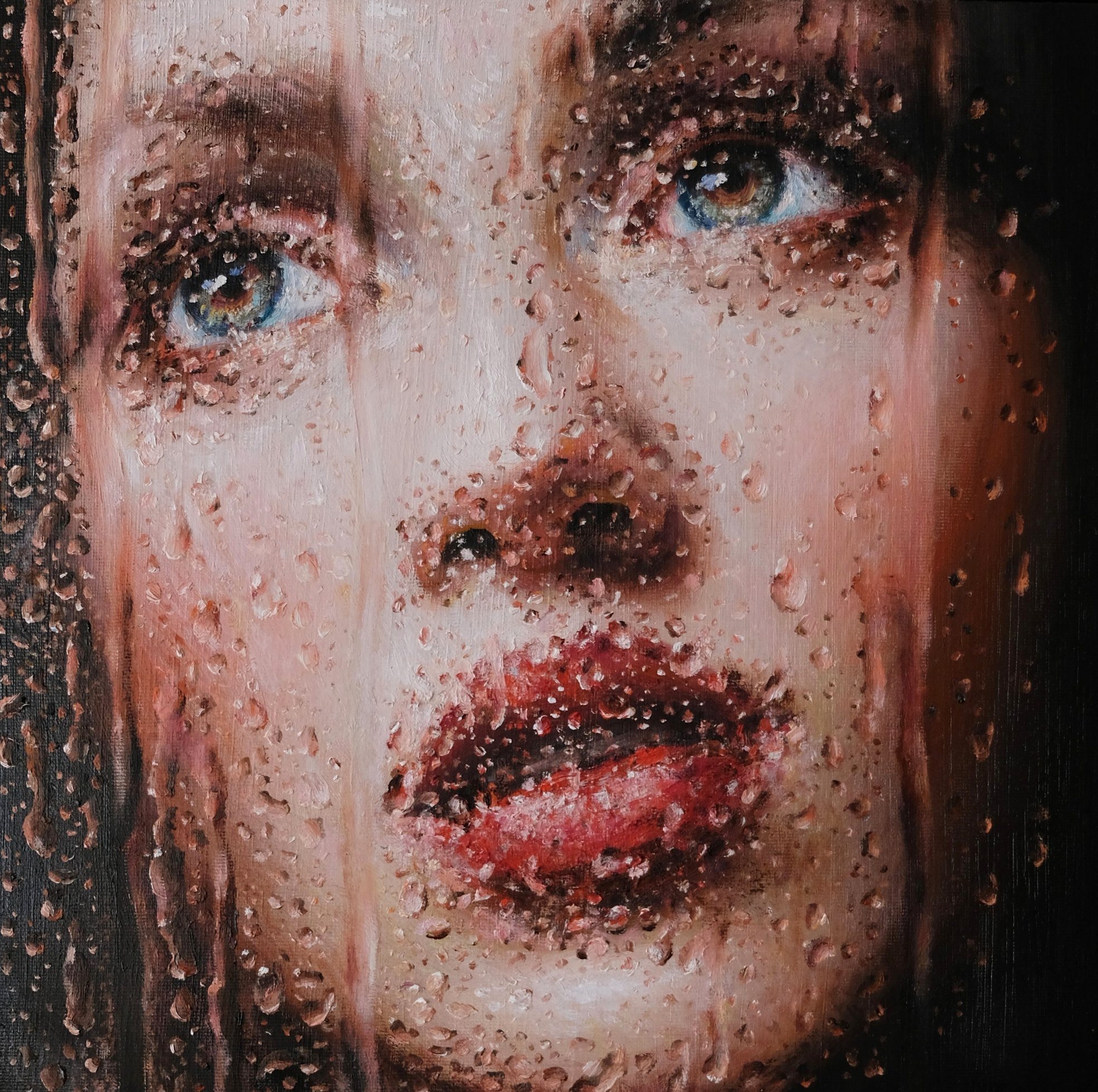
One work, or the start of a series. Reflection paintings share size and theme, so they grow naturally into a group.
Reflection #50, 40×40 cm, oil on canvas, 2026, €2,400

A different subject, the same hand. Hands and flowers from the Body Language series, next to the faces of Reflection.
Touch and Bloom, 50×40 cm, oil on canvas, 2024, €2,700
Hang your art where you see it every day, not in the guest room. Change the place now and then: a painting you move looks new again. And look after it: how to hang and care for an oil painting.
Start with the works under €1,500, browse all available works, or write to Lena with what you like and what you want to spend. She answers personally.