
Deutsche Version: Originalgemälde oder Kunstdruck? Was Sie wirklich bekommen
On a phone screen, an original painting and a good print of it look almost the same. Both are a picture of a picture. The difference shows up later, on your wall, in daylight and lamplight, over years. This guide explains what the different kinds of prints are, what an original gives you that a reproduction cannot, how to tell them apart, and when a print is honestly the better choice.
The examples come from the studio of Lena Krashevka in Cologne, where every work is painted by hand in oil, one at a time.
The word covers very different things, and sellers do not always make that clear:
1. The surface. Oil paint has a body. It sits in thin glazes in one place and in thicker strokes in another, and it catches the light differently from every angle. A print is a flat layer of ink. This close-up of a single eye from Reflection #49 shows what a print would flatten: every drop on the glass is a small, separate decision of the brush.
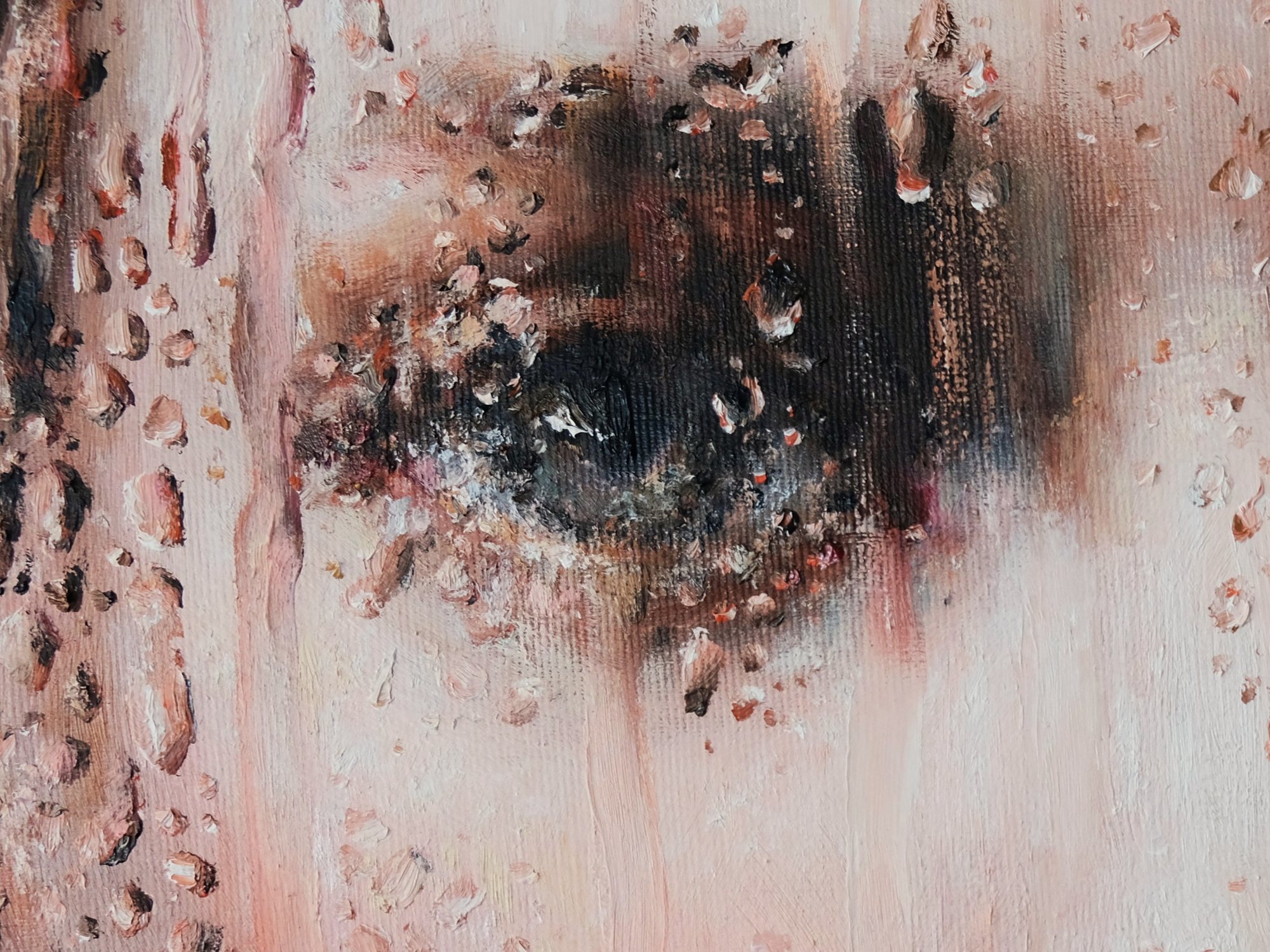
2. Colour and depth. In an oil painting, light passes through transparent layers of paint and reflects back from the layers below. That is why skin in a good painting can look warm and alive. A printer builds colour from tiny dots of a few inks next to each other, which reads well from a distance and less so up close.
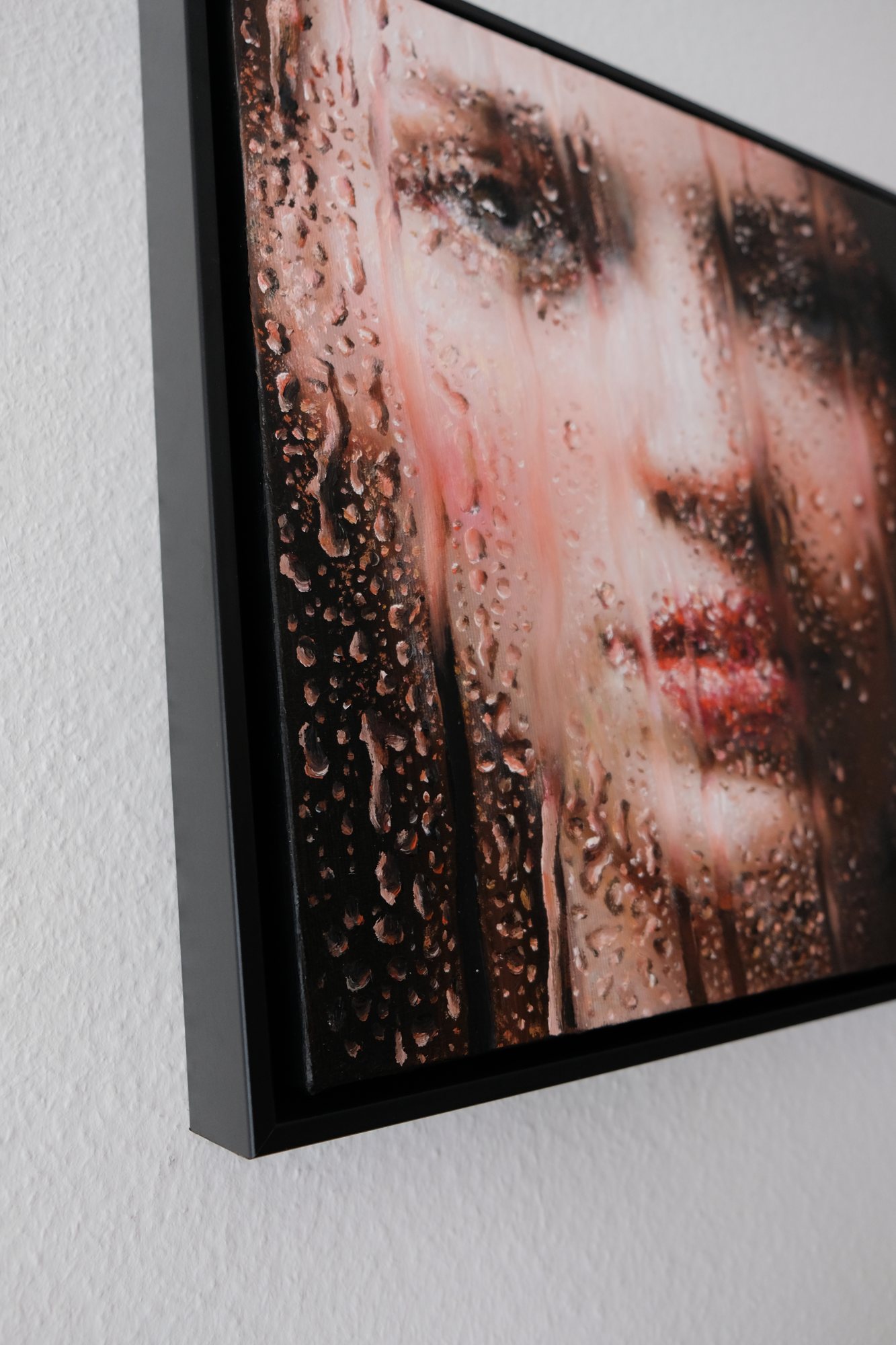
3. The edges. Look at a painting from the side and you see the thickness of the canvas, the frame and how the work sits on the wall. That is why every work on this site shows views from the side as well as from the front.
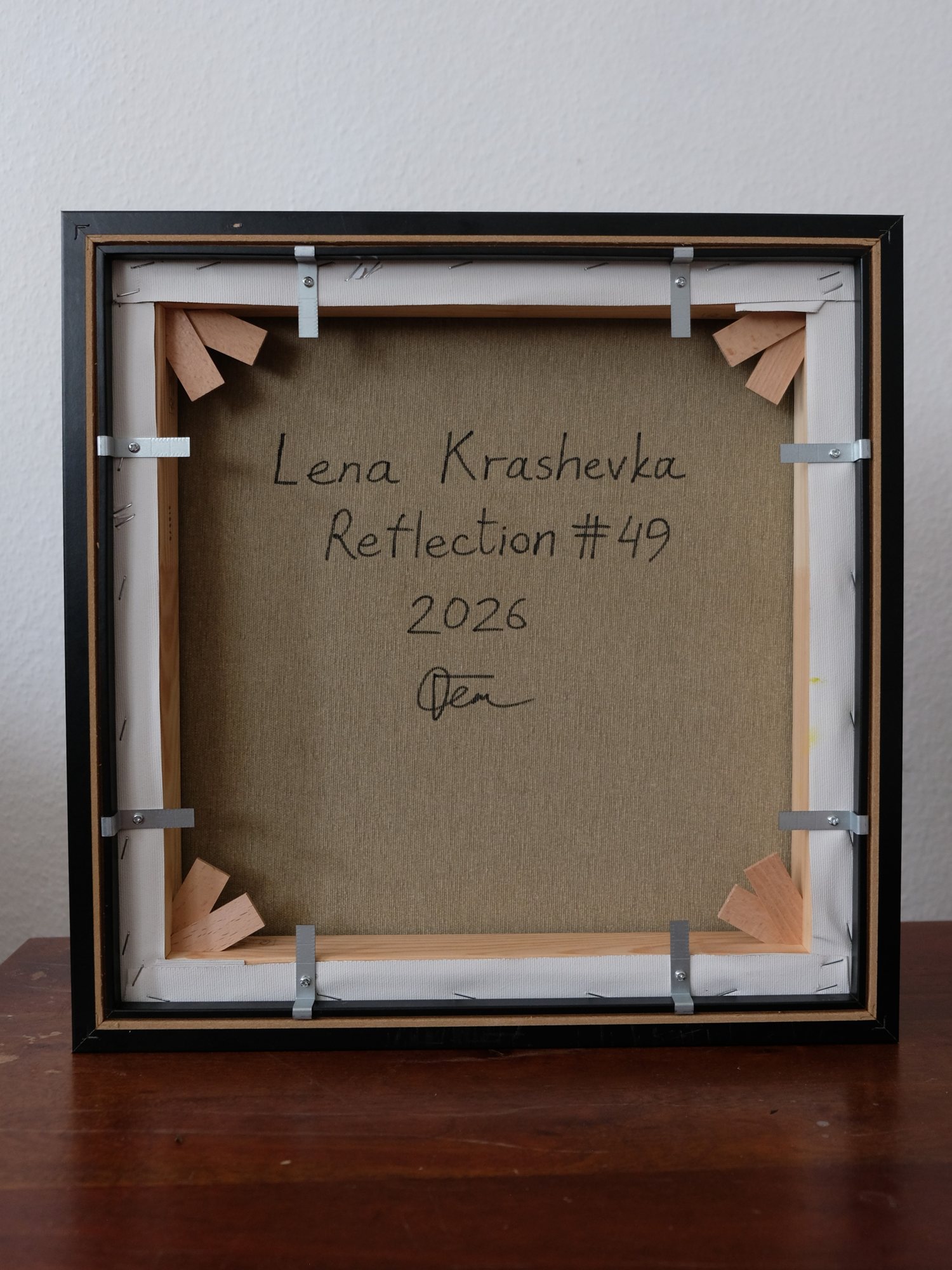
4. The back. The back of an original tells its story: the canvas, the stretcher, and in Lena’s case her handwritten name, the title, the year and her signature. The back of a print usually tells you nothing, or names the print shop.
5. One of one. An original exists once. It has a place in the artist’s work, a series, a year, a reason it was painted. When you buy it, nobody else can own the same painting, and you can ask the artist about it directly.
Useful when you buy at a fair, online or second hand:
Prints are not a bad thing. If you love a work that hangs in a museum, a good print is the only way to live with it. If you are furnishing a rental flat on a tight budget, or want a picture for a children’s room that will change in three years, a print makes sense. Just know what you are buying, and pay a print price for it: a canvas print should not cost what an original costs.
An original is the better choice when you want a work that stays with you: one that keeps revealing details, that has a story you can tell guests, and that was made by a person you could actually meet.
Many people assume original art starts at five figures. In Lena’s studio, small originals start at €930, and prices depend on size, not on hype. Three examples that are available now:

Illusion #13: a woman’s face in blurred lines and bright drops of colour. Small enough for a shelf or a desk, and a real original.
Illusion #13, 18×13 cm, acrylic and oil on canvas, 2021, €930

Fragile Nature from the Body Language series: a square format that works alone or in a group.
Fragile Nature, 30×30 cm, oil on canvas, 2024, €1,800
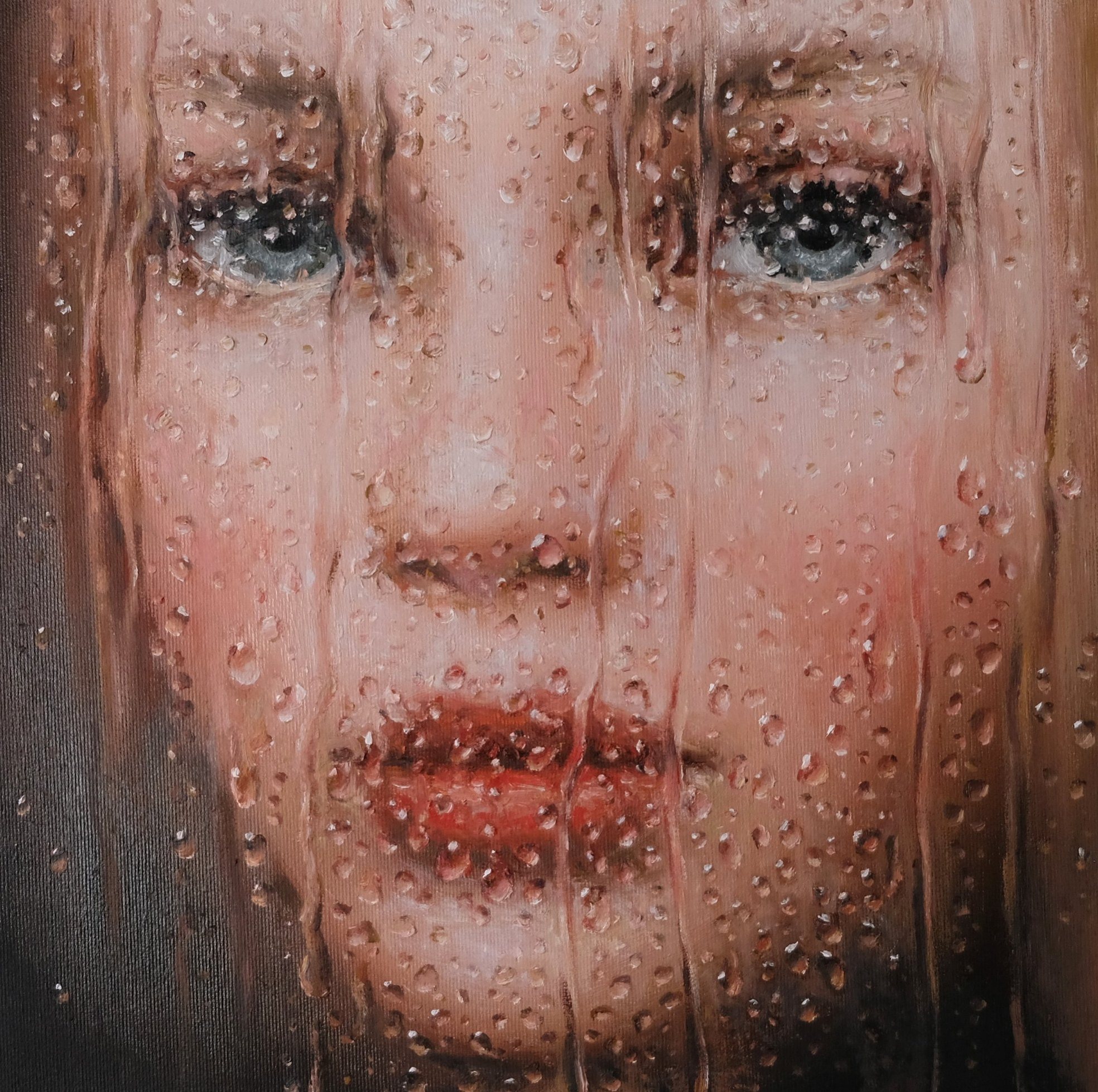
Reflection #40, new in 2026, from Lena’s best-known series: faces behind rain on glass, painted drop by drop.
Reflection #40, 40×40 cm, oil on canvas, 2026, €2,400
See all available works, sorted by size and price.
Is an original painting a good investment? Nobody can honestly promise that a painting will rise in value. Buy a work because you want to live with it. What an original does keep is its uniqueness, which a print never has.
Does Lena sell prints? No. Everything on this site is an original painting, made by hand in Cologne.
Can I see a painting before I buy it? Yes. Studio visits in Cologne are possible by appointment. Get in touch to arrange one.
How does the painting get to me? By insured shipping, or you collect it in Cologne by appointment. Lena answers every enquiry personally.
Have a question about a specific work? Use the “Acquire This Artwork” button on its page, or write to Lena. More reading: Made by Hand: why original painting matters more in the age of AI.