
Deutsche Version: Ölgemälde aufhängen, reinigen und pflegen: der praktische Ratgeber
An oil painting is robust. Paintings hundreds of years old hang in museums today. What harms a painting at home is rarely time: it is direct sun, heat, damp walls, the wrong cleaning trick or a bump during a move. This guide covers the few things that matter, from the studio of Cologne painter Lena Krashevka.
Height. Hang the centre of the painting at about 145 to 155 cm from the floor, roughly eye level. Above a sofa or sideboard, leave 15 to 25 cm between the furniture and the bottom of the painting. More on sizes and walls in the size guide.
Hooks. Use picture hooks or screws rated for more than the weight of the painting:
Look at the back first. A painting may have a wire, two hanging plates, or nothing at all, in which case the top bar of the wooden stretcher sits on the hooks. Small rubber bumpers on the lower corners keep the painting straight and let air circulate behind it.
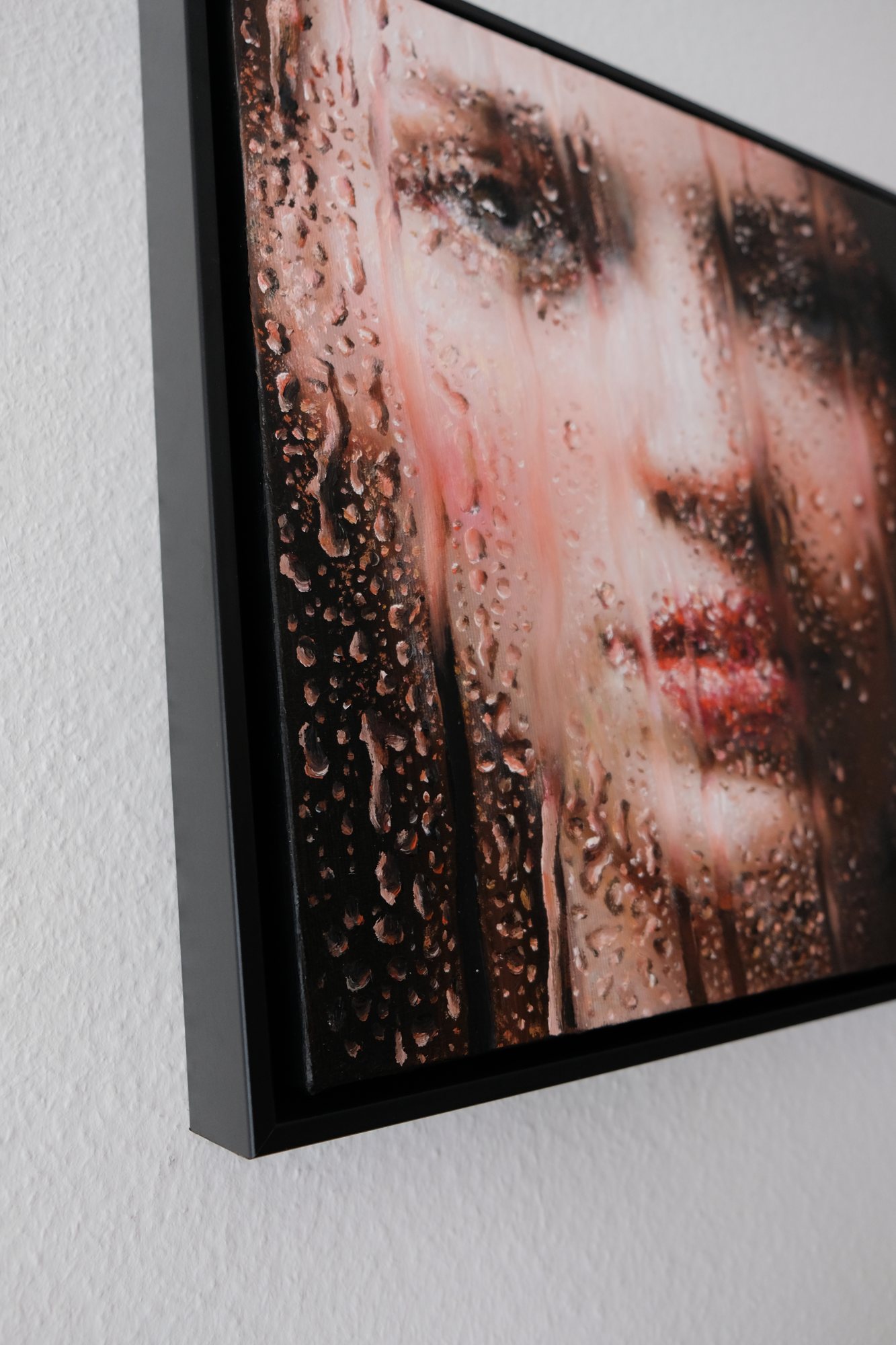
A steady indoor climate is ideal: around 18 to 24 °C and 40 to 60 percent humidity, which is what most living rooms have anyway. For lighting, LED lamps are best, because they give off almost no UV and little heat. Warm white (2,700 to 3,000 K) suits most paintings.
Dust every few months with a soft, dry brush, for example a wide make-up brush or a soft paint brush, working gently from top to bottom. That is all most paintings ever need.
Never:
Yellowed varnish, nicotine film, soot, mould or a dent in the canvas are jobs for a paintings conservator (restorer). A professional cleaning costs less than repairing a damaged surface.
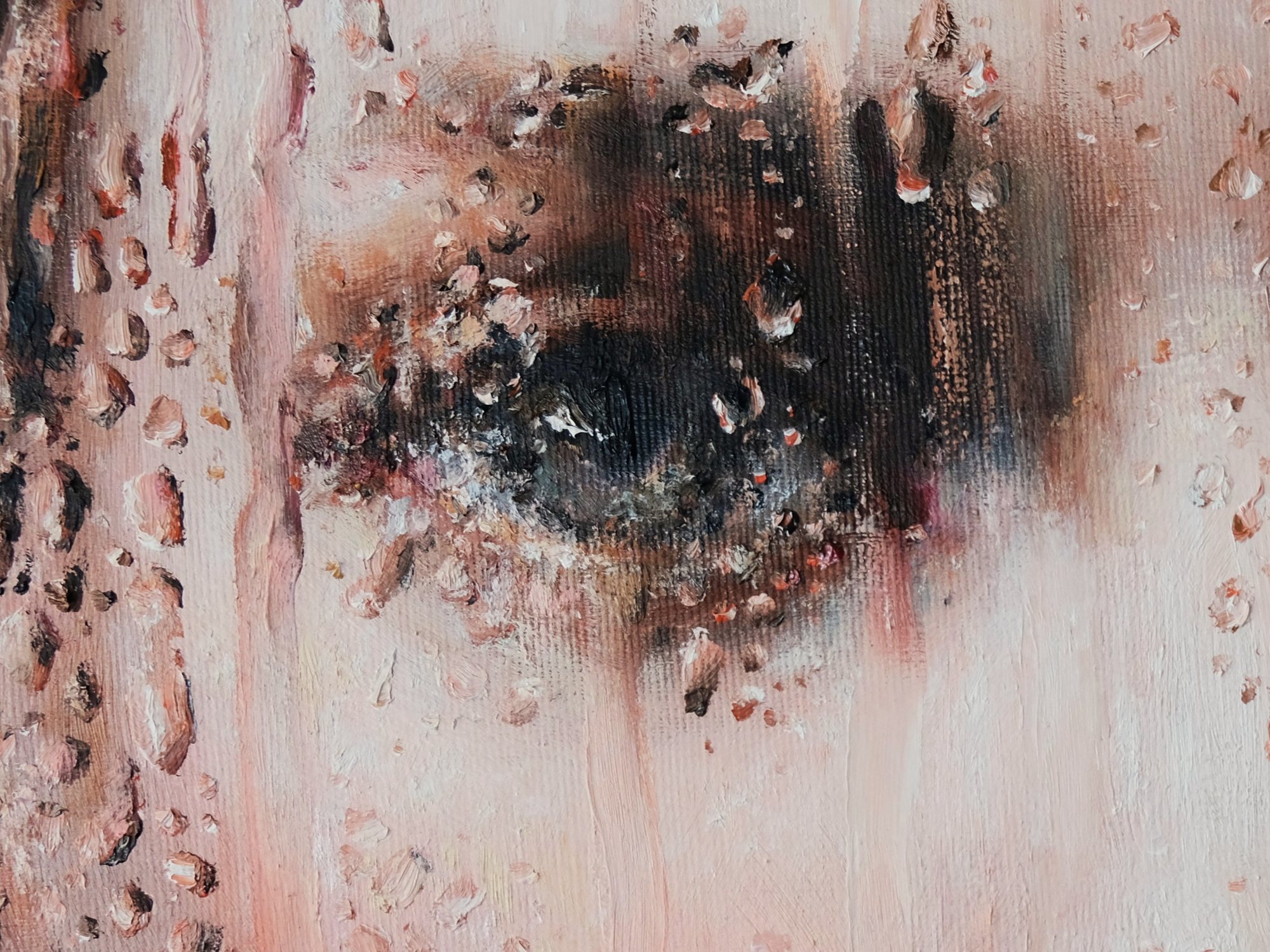
Oil paint feels dry within days, but it keeps curing for months. With a recently painted work, do not press anything against the surface, do not wrap it tightly in plastic for long, and keep it upright with air around it.
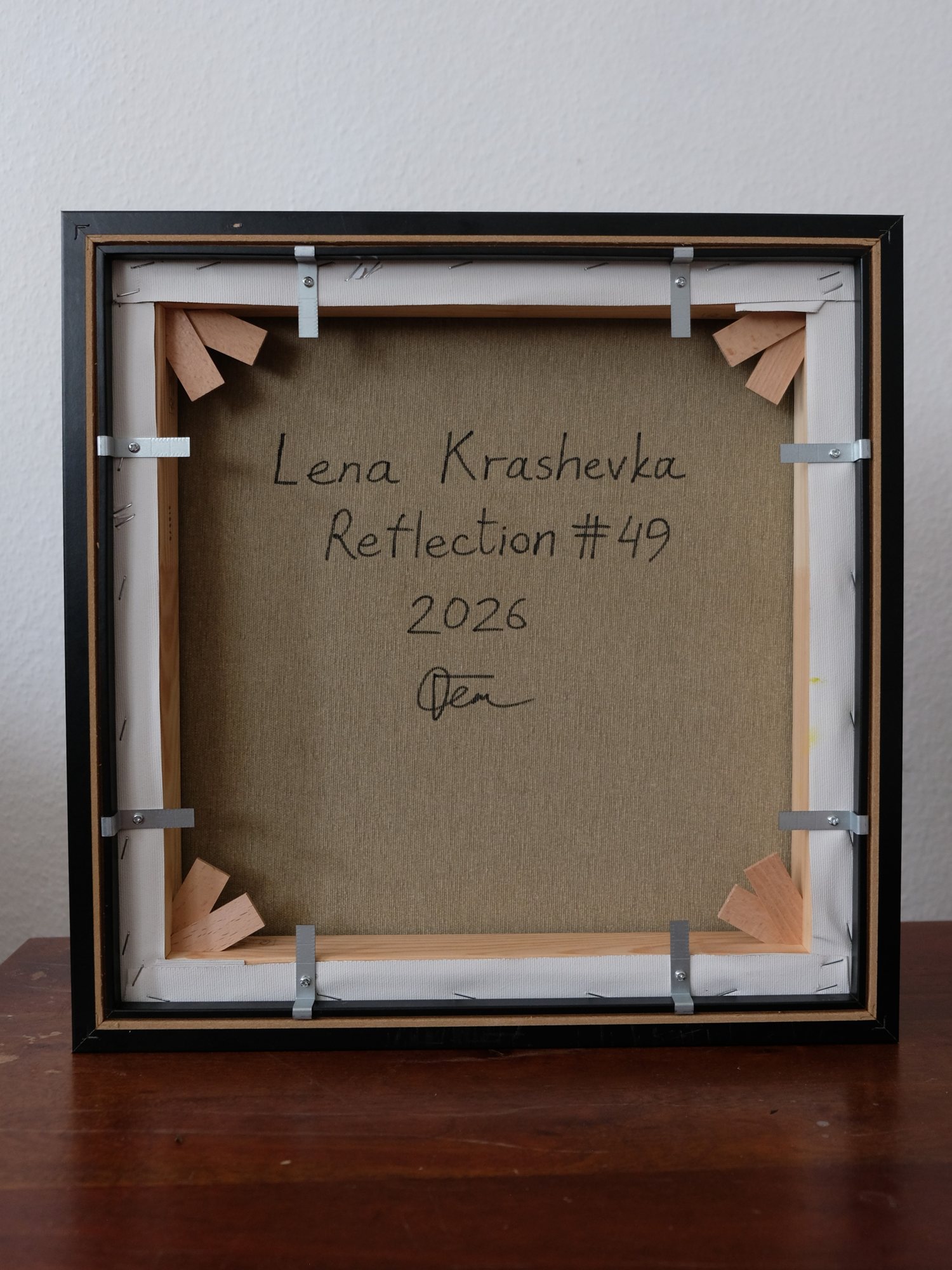
Many paintings have small wooden wedges in the corners of the stretcher, like the ones on the back of Reflection #49 below. They are there to re-tension the canvas: if it becomes slightly slack over the years, tapping the wedges a little deeper spreads the frame and tightens the canvas. Do it gently and evenly, or let a framer or restorer do it. If a wedge falls out, keep it and put it back.
Carry a painting with both hands on the frame, never by the top edge or by pressing on the canvas. For a move, cover the front with glassine or acid-free paper first and only then wrap it in bubble wrap: bubble wrap directly on the paint can leave its pattern in the surface. Lena knows a lot about bubble wrap: she paints it in her Isolation series.
If you own a painting by Lena and are unsure about hanging, cleaning or a mark on the surface, write to her with a photo. More reading: what an original oil painting costs and all available works.